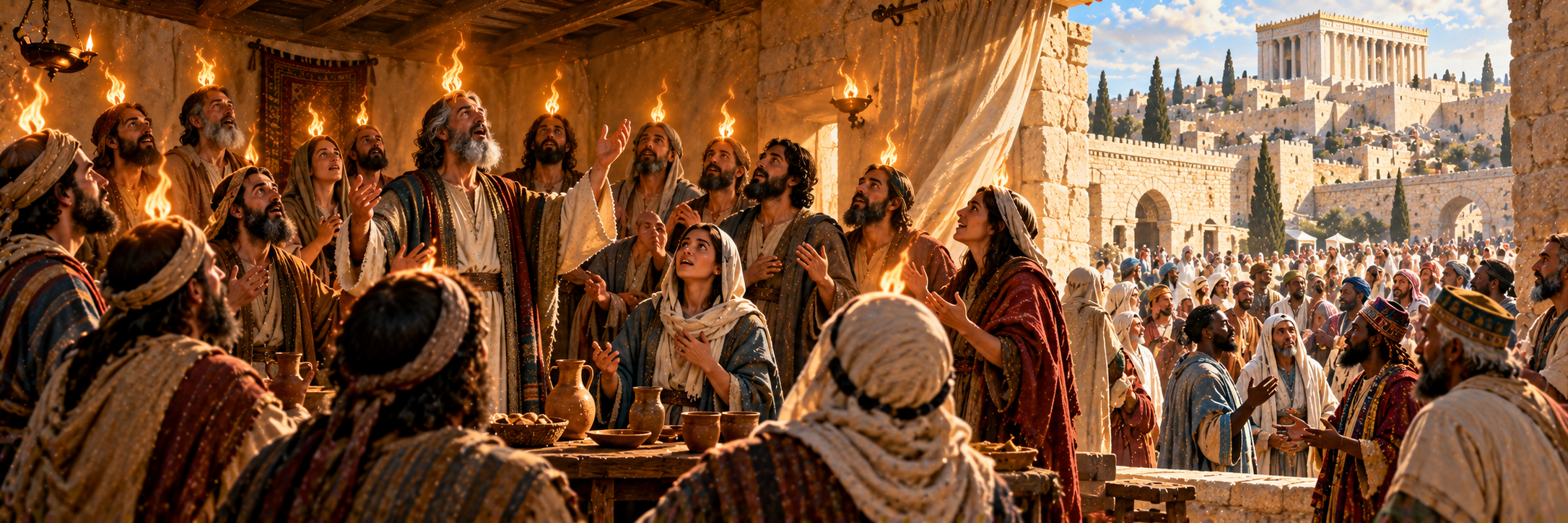
A book of history, sometimes grouped with the Gospels, sometimes treated as a unique work; the fifth book of the New Testament; the forty-fourth book of the Bible.
Author: The book of Acts is the second of a two-part work, both traditionally attributed to Luke. The introduction to Luke (Luke 1:1–4) also explains the purpose of the book of Acts: to create an orderly record. Luke travelled with Paul (Colossians 4:14; 2 Timothy 4:11; Philemon 1:24), and the writer of Acts uses the terms “we” or “us” in several instances (Acts 16:10–17; 20:5; 27:1). This further supports the view that Luke was indeed the author.
Audience: Luke is most likely the only Gentile (non-Jewish) author of New Testament writing, emphasizing God’s plan for all people. He also wrote the Gospel of Luke (Luke 1:1–4) as the first segment of a two-part work. In Acts, Luke picks up where his Gospel ends, starting with the ascension of Jesus and continuing to the end of Paul’s first Roman imprisonment in approximately AD 62.
Date: Many dates have been suggested for Acts. The Gospel of Luke and the book of Acts are two parts of a single overall narrative. Acts ends with Paul in Rome in approximately AD 62, but does not mention Paul’s death in the mid-AD 60s. Therefore, a date between AD 62 and 65 is likely.