Bible Figure
Alexander the Great

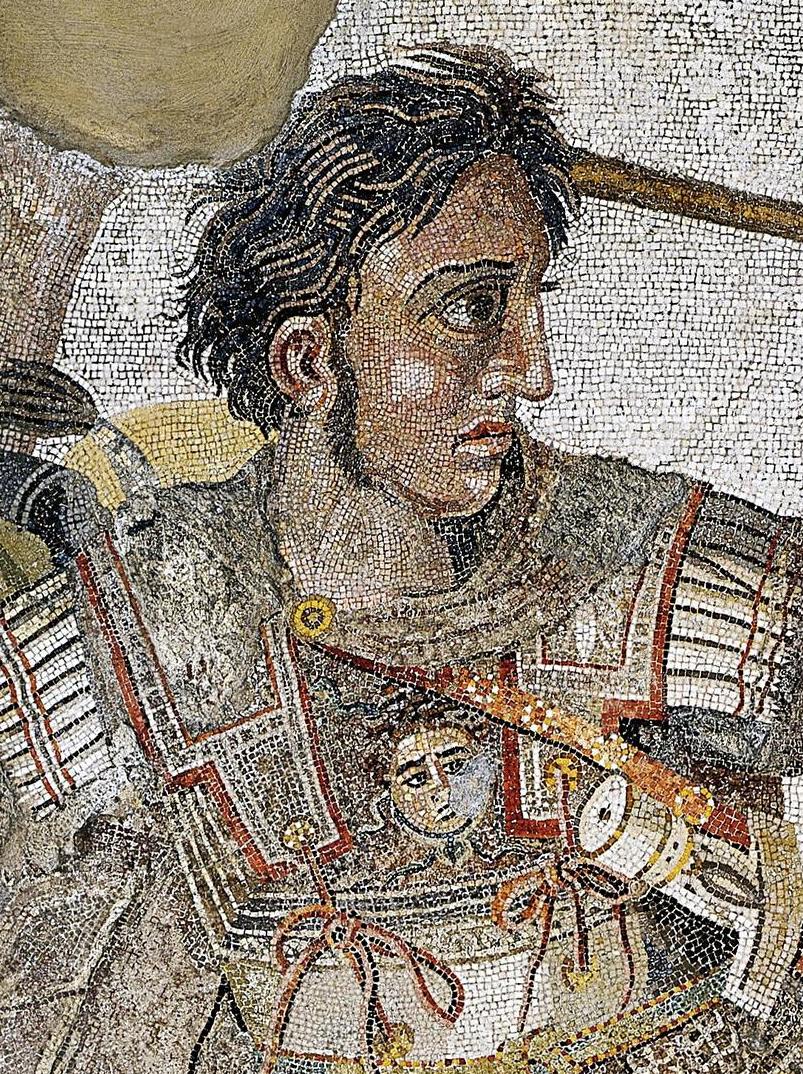
Alexander the Great was king of Macedonia from 336 to 323 BC and one of antiquity's most consequential conquerors. He destroyed the Achaemenid Persian Empire, conquered territory from Greece and Egypt through Mesopotamia and Persia into Central Asia and northwestern India, and created an empire of extraordinary scale before dying at Babylon at age thirty-two. The division of his conquests after his death created the Hellenistic political world that later shaped Judea.
Biography
Alexander III was born at Pella in 356 BC, the son of Philip II of Macedonia and Olympias. His father had transformed Macedonia into the dominant Greek military power, and the young Alexander received an elite education traditionally associated with Aristotle. When Philip was assassinated in 336 BC, Alexander secured the Macedonian throne and suppressed challenges to his authority. He then carried out the planned invasion of the Persian Empire. His victories at the Granicus River, Issus, and Gaugamela broke the power of Darius III and opened the Persian imperial centers to Macedonian control. Alexander moved through Asia Minor and the Levant, took Egypt, where Alexandria was founded, entered Mesopotamia, occupied Babylon and the Persian capitals, and continued eastward through Iran and Central Asia. His campaigns eventually crossed into the Indian subcontinent before his exhausted army refused to advance farther east. Alexander returned toward the imperial heartland while attempting to consolidate an enormous and culturally diverse realm. He adopted some Persian court practices, encouraged integration between Macedonian and Persian elites, founded or refounded numerous cities, and accelerated the spread of Greek language and culture across the eastern Mediterranean and Near East. In 323 BC, while at Babylon and preparing further campaigns, Alexander became ill and died at age thirty-two. He left no adult heir capable of holding the empire together. His generals and successors divided the territories, producing the Ptolemaic and Seleucid kingdoms among others.
Biblical Significance
Alexander's importance to biblical history is primarily what followed his conquest. The Hellenistic world created by his campaigns made Greek language and culture dominant across much of the eastern Mediterranean. After his death, Judea became contested between the Ptolemaic and Seleucid successor kingdoms, eventually leading to the persecution under Antiochus IV and the Maccabean revolt. The Greek-speaking environment also became crucial to the transmission of the Septuagint and later to the world in which the New Testament was written and spread.