Bible Figure
Esther
Biblical Jewish queen of Persia and Medes (Book of Esther)

Esther was a Jewish woman who became queen of Persia and, through courage and providential circumstances, helped save her people from destruction. Orphaned and raised by her cousin Mordecai, Esther was chosen as queen after Vashti was removed. When Haman obtained royal authority for a decree ordering the destruction of the Jews, Mordecai urged Esther to appeal to the king despite the danger of approaching him uninvited. After fasting, Esther courageously intervened, exposed Haman's plot, and secured protection for her people. The deliverance commemorated in the feast of Purim is rooted in these events. Esther's story is a powerful account of courage, responsibility, and God's providential care.
Biography
Esther, whose Hebrew name was Hadassah, was a Jewish orphan living in the Persian Empire. She was raised by Mordecai, her older cousin or relative. When King Ahasuerus sought a new queen after the removal of Vashti, Esther was taken into the royal household and ultimately won the king's favor. Following Mordecai's instructions, she initially concealed her Jewish identity.
The crisis of the book arose through Haman, a high official who became enraged when Mordecai refused to bow before him. Rather than punish Mordecai alone, Haman sought the destruction of all the Jews throughout the empire. He persuaded the king to authorize a decree fixing a day for their annihilation.
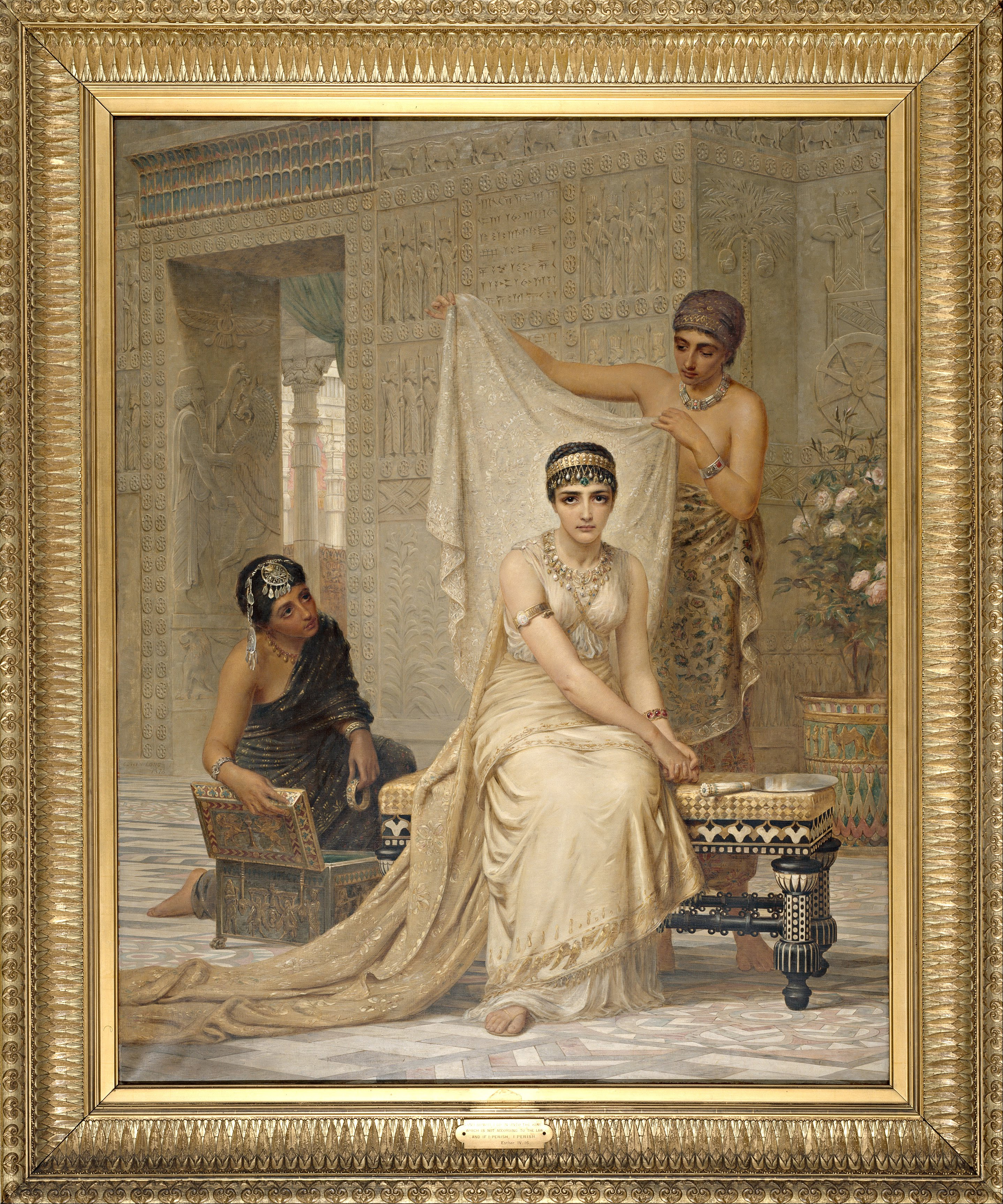
Mordecai urged Esther to intervene. Approaching the king without being summoned could result in death, and Esther initially pointed out the danger. Mordecai challenged her to consider whether she had come to royal position for such a time as this. Esther then asked the Jews of Susa to fast for her for three days and resolved to approach the king.
The king received Esther favorably. Rather than immediately state her request, she invited the king and Haman to banquets. At the second banquet she revealed her Jewish identity and exposed Haman's plan. Haman was executed on the gallows he had prepared for Mordecai.
Because the original Persian decree could not simply be revoked, a new decree allowed the Jews to defend themselves. Their deliverance became the basis for the annual feast of Purim. Esther remained an instrument through whom her people were preserved.
Biblical Significance
Esther demonstrates courageous faithfulness in a setting where God's providence is more evident through events than through overt miracles. The book of Esther famously does not name God, yet its sequence of reversals, timely circumstances, and deliverance has long been understood as displaying providential care for the Jewish people. Esther's willingness to risk her life for others is central to the story. Her position brought privilege, but also responsibility. The preservation of the Jews also protected the covenant people through whom God's larger redemptive promises would continue. Purim became the enduring Jewish commemoration of the deliverance described in the book.