

While there is not much information in the Bible about Joseph of Arimathea, there are certain things we can glean from the text.
Matthew 27:57, explains that Joseph was from Arimathea. The Greek word for Arimathea (Ἁριμαθαία), means “heights”, while the word itself is of Hebrew origin and is transliterated “ramah” meaning “hill”. One candidate is a town called Aramathea about 16 miles east of Joppa. However, of the four places in Palestine with the name Ramah, the one we may find most attractive is the one that is the birthplace of Samuel (1 Samuel 1:1). Accordingly, Thayer’s Greek Lexicon states that Joseph of Aramathea was likely from Mt Ephraim, the same place where Samuel was born.
In Luke 23:50, we learn that Joseph was actually a part of the Council, (or Sanhedrin), which called for Jesus’ crucifixion. However, as we also read (verse 51), Joseph was opposed to the Council’s decision and was in fact a secret follower of Jesus (also Mark 15:43). Joseph was also a wealthy man (Matthew 27:57), although the source of his wealth is unknown, and the Bible refers to him as “good and upright” (Luke 23:50).
After Jesus’ death on the cross, Joseph risked his reputation by going to the Roman governor Pilate and requesting the body of Jesus. Nicodemus, the Pharisee who had visited Jesus at night to ask questions about God’s Kingdom (John 19:39), came to accompany Joseph at some point. After being granted custody of Jesus’ body, the two men immediately began to prepare the body for burial. Following Jewish custom, they wrapped the body in strips of linen and mixed in myrrh and aloe. Because it was the Day of Preparation (the sixth day of the week), however, and since it was late in the day, Joseph and Nicodemus hurriedly placed Jesus in Joseph’s own new tomb, which happened to be located in a garden Golgatha.
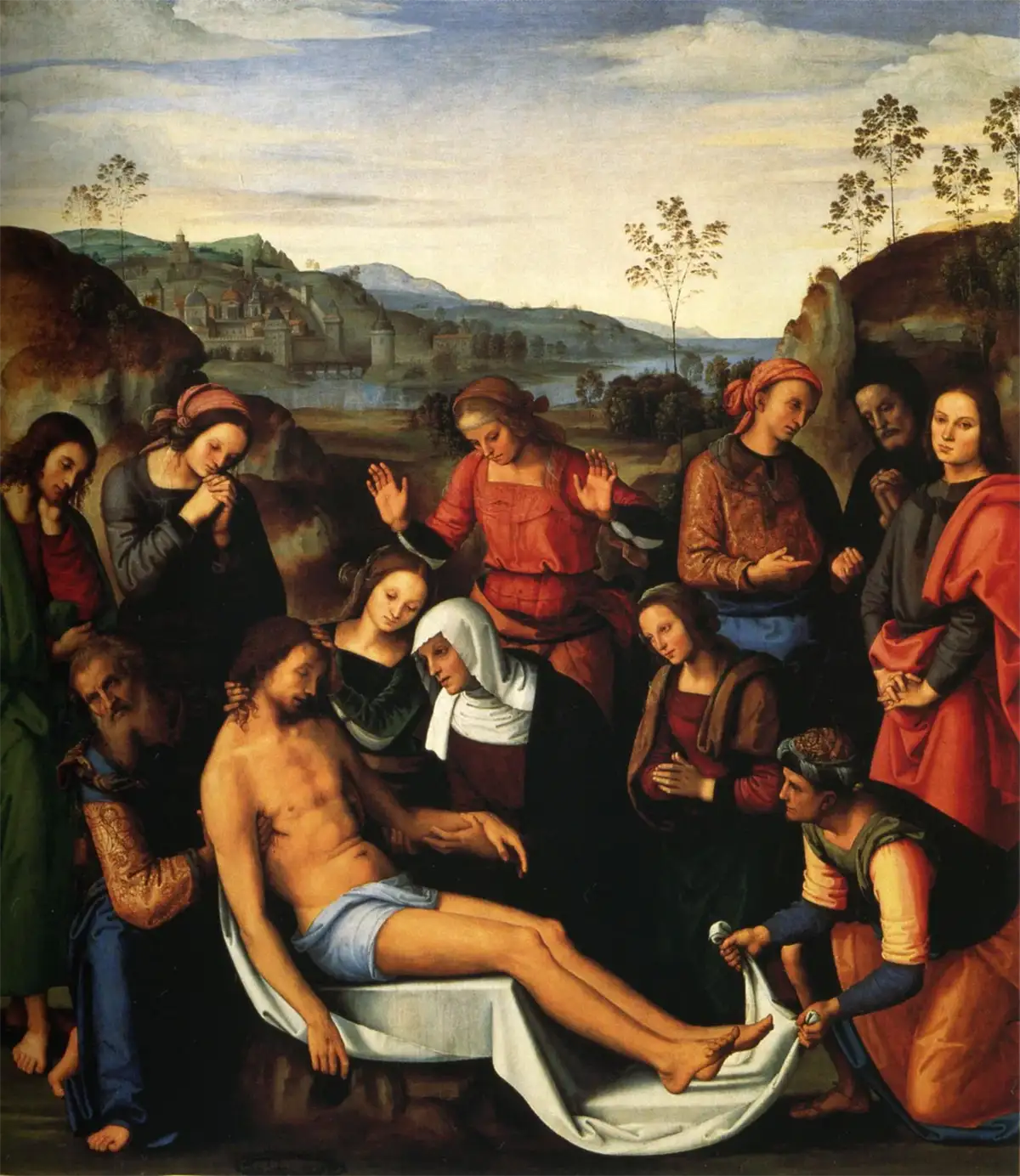
Amazingly, their act of putting Jesus in Joseph’s tomb fulfilled Isaiah’s prophecy from centuries earlier, that stated, “He was assigned a grave with the wicked, and with the rich in his death, though he had done no violence, nor was any deceit in his mouth” (Isaiah 53:9). This is one many prophecies that have confirm Jesus’ identity as the Messiah.
So, while the amount of text devoted to Joseph of Arimathea in the Bible is small, it can tell us much about the man and his character. Additionally, sources outside the Bible add other interesting items, some plausible and some perhaps not.
The Jewish Talmud states that Joseph was the great-uncle of Jesus, a younger brother of Mary's father. This story may originate from the tradition that the senior male relative of a crucified person was obliged to deal with the body. As Jesus' father was no longer living, Joseph of Arimathea might have taken on the task if he had been related to Jesus in some way. Although this could be considered a possibility, it is certainly without support within the biblical text.
Also without supports are a variety of legends, likely originating in the middle ages, such as:
Joseph of Arimathea was the first person to bring Christianity to Britain, (being sent by Saint Philip)
He built Britain's first church
He was a merchant who visited England to buy Cornish tin
He took Jesus with him to England when Jesus was a teenager
He brought to England two vials containing the blood and sweat of Jesus
He brought the Holy Grail to England and hid it in a well at Glastonbury, now called the Chalice Well
Most believe such legends as these are unpersuasive.


