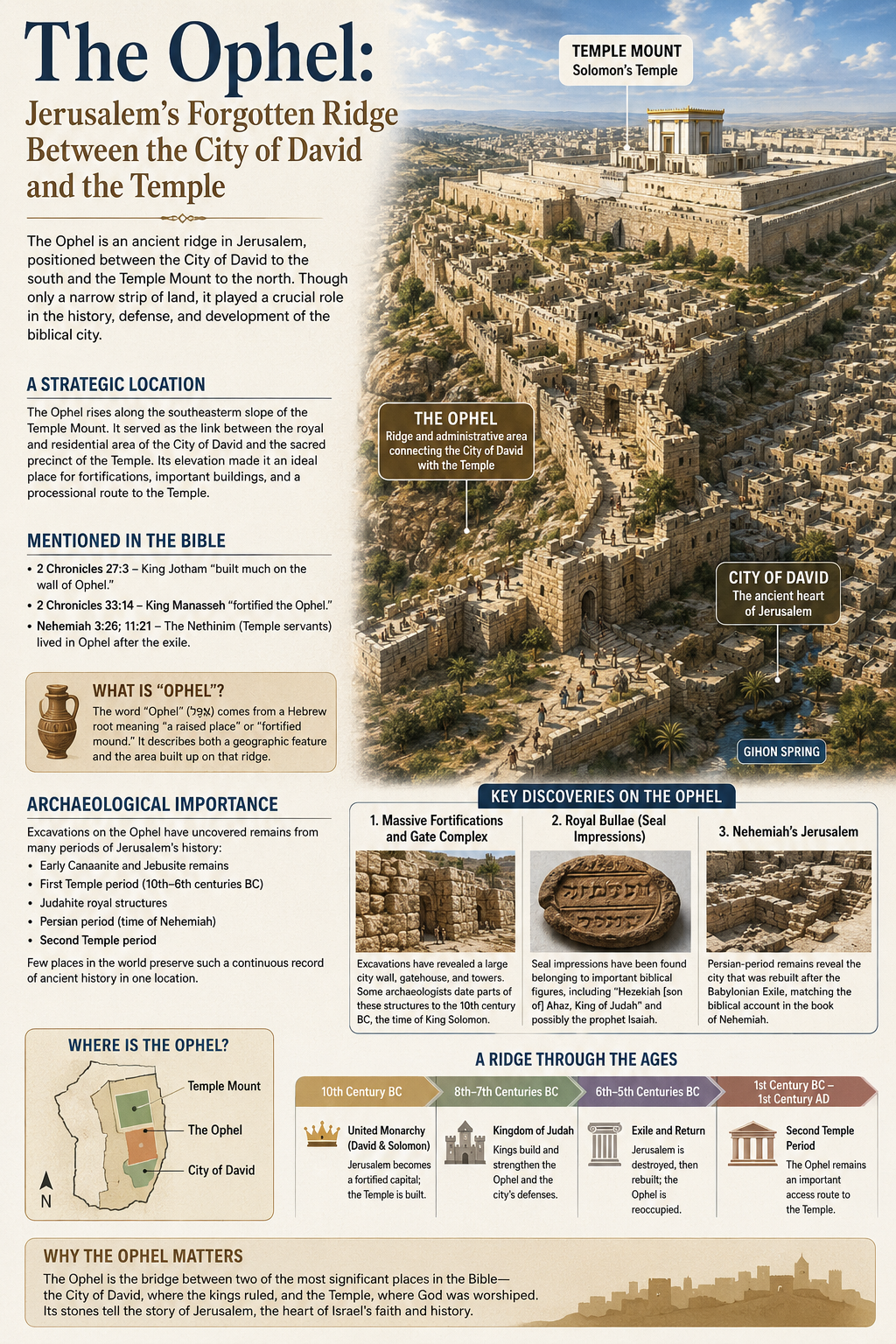

A Strategic Location
The Ophel rises along the southeastern slope of the Temple Mount. It served as the link between the royal and residential area of the City of David and the sacred precinct of the Temple. Its elevation made it an ideal place for fortifications, important buildings, and a processional route to the Temple.
Mentioned in the Bible
- 2 Chronicles 27:3 — King Jotham “built much on the wall of Ophel.”
- 2 Chronicles 33:14 — King Manasseh fortified the Ophel.
- Nehemiah 3:26; 11:21 — The Nethinim, or Temple servants, lived in Ophel after the exile.
The word “Ophel” comes from a Hebrew root meaning a raised place, fortified mound, or elevated area. It can describe both a geographic feature and the area built upon that ridge.
Archaeological Importance
Excavations on the Ophel have uncovered remains from many periods of Jerusalem's history, including early Canaanite and Jebusite remains, First Temple period structures, Judahite royal buildings, Persian-period remains from the time of Nehemiah, and Second Temple period construction.
Important discoveries include massive fortifications and gate structures, royal seal impressions known as bullae, and remains that help illuminate Jerusalem's rebuilding after the Babylonian Exile.