Childhood in a Jewish Family
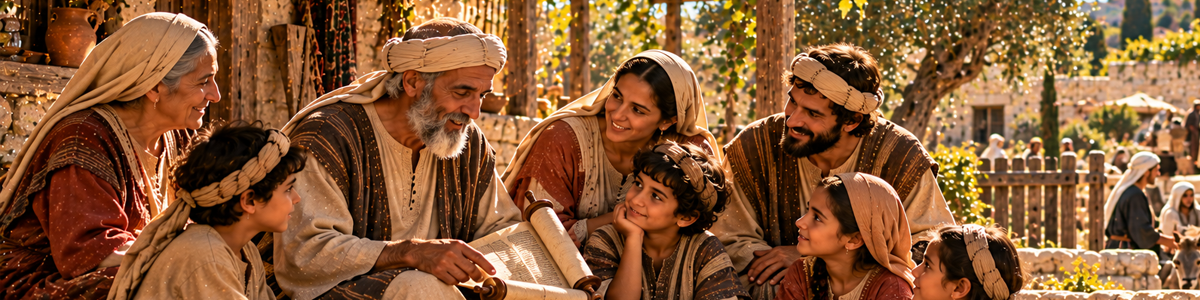
Children grew up as part of a close family household. Parents provided for them and taught them how to live within the family and community. As children grew older, they gradually took on more responsibility.


Children were an important part of the first-century Jewish household. They were loved and cared for, but they also grew up in a world very different from childhood today.
From an early age, children lived close to the work and responsibilities of the family. They learned by watching the adults around them and gradually began helping with everyday tasks.
Childhood centered on the household. Parents and other relatives cared for young children and taught them how to live within the family and community.
As children grew, they learned practical skills by watching and helping. Boys and girls might gradually take on different responsibilities, although the exact work depended on the needs of the household.
Children also learned the beliefs and practices of Jewish life. Scripture, prayer, festivals, and the Sabbath were part of the world in which they grew up.
Children had opportunities to play as well as work. Archaeology and ancient writings provide evidence for toys and games in Roman Palestine.
Childhood could also be fragile. Illness was dangerous, and some children did not survive to adulthood. Those risks make the biblical picture of children as a blessing especially meaningful.
Our evidence for childhood comes from several directions. Ancient Jewish writings discuss children and family responsibilities. Archaeology provides evidence for homes and some forms of play.
The Bible also tells us much about how Jewish families understood children. Parents were expected to teach their children and bring them up within the faith of Israel.
We know less about the ordinary day of a particular child in a Galilean village. Later Jewish writings can help, but they must be used carefully when describing the first century.
Children appear throughout Scripture as members of the family and as gifts from God. Parents were responsible for teaching the next generation about the Lord and His commandments.
Deuteronomy tells parents to speak of God's commands in the ordinary course of daily life. The Psalms describe children as a blessing from the Lord.
The Gospels continue this strong interest in children. Parents bring their children to Jesus, and He welcomes them. Jesus also uses children to teach His disciples important lessons about humility and the kingdom of God.
Understanding childhood helps us picture the families that surrounded Jesus. Children were present in homes and villages. They were part of the crowds and communities in which He taught.
It also helps us understand why the Gospel stories about children carried such emotional force. A sick child could place an entire family in crisis.
Most importantly, this background helps us hear Jesus' words about children within the real family world of His time.

Children grew up as part of a close family household. Parents provided for them and taught them how to live within the family and community. As children grew older, they gradually took on more responsibility.
The household was where most children first learned how the world worked. They watched adults prepare food and earn a living. As they became able, children began helping with the work around them.
Boys and girls grew up together within the family, but they did not always prepare for the same adult responsibilities. As children became older, differences between the expected lives of men and women became more important.
Children commonly grew up around other children. Brothers and sisters shared the household, while cousins and neighbors might live close by. Childhood was therefore usually part of a larger family and community world.
Children were commonly regarded as a blessing from God. They brought joy to a household and represented the future of the family. The hope for children was therefore both deeply personal and closely connected with faith.

As children grew, they could begin helping with the work of the household. Their responsibilities depended on their age and abilities. What the family needed also mattered.
Much of a child's practical education happened by watching other people. Children saw adults work and gradually learned to help. Skills could be passed from one generation to the next through everyday experience.
Children in the ancient world did more than work and learn. They also played. Archaeology and ancient writings show that children had toys and enjoyed games with other children.
Children wore simple clothing made from the same basic materials used for adult garments. Clothing had to be practical and affordable. A growing child also needed garments that could be replaced or adjusted over time.
Parents were responsible for guiding their children and correcting them when necessary. Children were expected to respect parental authority. Discipline was part of preparing a child to become a responsible adult.
Jewish children grew up surrounded by the faith of their families. They encountered prayer, Scripture, the Sabbath, and the great festivals as part of ordinary life. Religious learning began within the household and community.
A child's world extended beyond the walls of the family home. In a village, children encountered relatives and neighbors as part of everyday life. They grew up within a community where many people knew one another.

Not every child survived infancy or childhood. Disease could become dangerous quickly, and families had few effective treatments for serious illness. The death of a child was therefore a painful reality that ancient families knew well.
Childhood gradually gave way to adult responsibility. There was no single moment when every child suddenly entered adulthood. As young people grew, families expected more from them and prepared them for the roles they would eventually take on.
© 2026 AVisitWithJesus
"For God so loved the world, that he gave his only begotten Son,
that whosoever believeth in him should not perish, but have everlasting life."
