Men's daily lives were shaped by responsibilities to family, work, community, and faith. Many men spent much of their time earning a living and helping provide the resources their households needed.
Work was important, but it was only one part of a man's life. Men were also husbands, fathers, sons, neighbors, and members of Jewish communities whose lives were shaped by Scripture and religious practice.
Overview
The household stood at the center of a man's responsibilities. A husband and father was expected to contribute to the security and well-being of his family.
For many men, this meant substantial physical work. Farming, fishing, building, craftsmanship, trade, and hired labor were among the ways people earned their living.
Skills could be learned within families and passed from one generation to another. Some men worked independently, while others worked for landowners, craftsmen, merchants, or other employers.
Men also participated in the wider life of the village or town. Business, disputes, community decisions, and relationships with neighbors brought household heads into regular contact with other people.
Jewish religious life shaped the week and the year. The Sabbath, synagogue, prayer, Scripture, festivals, and journeys to Jerusalem all formed part of the religious world in which Jewish men lived.
What We Know
Literary and archaeological evidence shows that men worked in a wide variety of occupations in Roman Palestine. Agriculture remained fundamental, but skilled crafts, construction, fishing, trade, and hired labor were also important.
Men's work was closely connected with the household economy. Income, property, labor, and family responsibilities were not separate parts of life in the modern sense.
Men's experiences nevertheless varied greatly. Wealth, occupation, family position, and location could produce very different daily lives.
Biblical Context
Scripture frequently presents men within the overlapping worlds of family, work, community, and faith. Fathers were responsible for their households and for passing knowledge of God to the next generation.
The Gospels reflect the same world. They introduce fishermen, craftsmen, farmers, hired workers, merchants, tax collectors, landowners, servants, and religious teachers.
Jesus Himself grew up in the household of Joseph, whom Matthew identifies as a craftsman. Mark later applies the same occupational term to Jesus.
Why It Matters
Understanding men's daily life helps us see the Gospel world as a working world. The men who heard Jesus had households to support, work to perform, obligations to meet, and communities in which they lived.
This background gives greater meaning to Jesus' frequent illustrations involving fields, vineyards, wages, fishing, building, debts, servants, and household responsibilities.
It also reminds us that most of Jesus' disciples were not professional religious scholars. They came from the ordinary working world of first-century Jewish life.
Men in the Family
A Man's Place in the Household
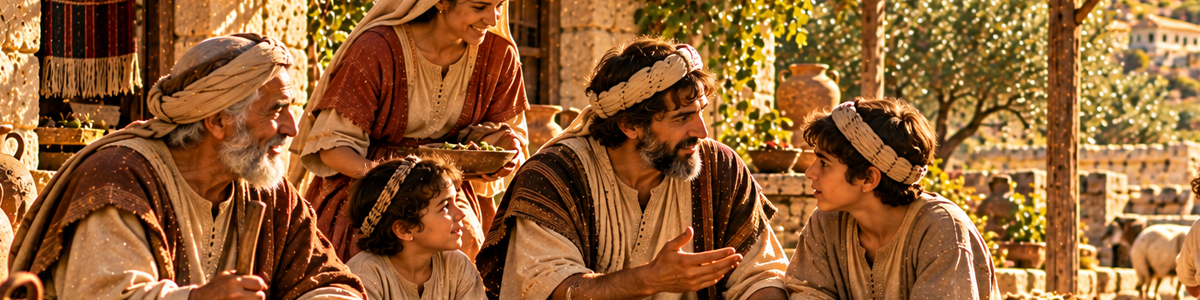
Men were important members of the household as husbands, fathers, sons, and workers. Adult men could carry significant responsibility for property, work, family security, and the household's relationships with the wider community.
Fathers and Household Authority
Fathers held an important place in first-century Jewish households. They had responsibilities toward their wives and children. They also had an important role in the family's economic and religious life. Their authority was real, but it came with obligations.
Expectations of Husbands and Wives
Husbands and wives had different responsibilities within the household. A husband was expected to help provide for his family. A wife played a central role in managing the home. Their work together helped keep the household functioning.
Providing for the Household
Providing for a household required access to food, clothing, shelter, and other necessities. A man's work could make an important contribution to those needs, but ancient households commonly depended on the productive efforts of several family members.
Family Property and Inheritance
Property helped support a family and could provide security for the next generation. Land was especially important, but families could own other forms of property as well. Inheritance rules determined who received property after a death. These rules were closely tied to family relationships.
Work and Providing
The Daily Work of Men
Work occupied a substantial part of daily life for many men. Agriculture was fundamental, but men also worked as fishermen, builders, craftsmen, merchants, hired laborers, and in other occupations.
Working the Land
Agriculture was fundamental to life in Roman Palestine. Men who worked the land prepared soil, planted crops, tended fields, and helped bring in harvests. Their work followed the seasons and depended heavily on weather and rainfall.
Craftsmen and Skilled Trades
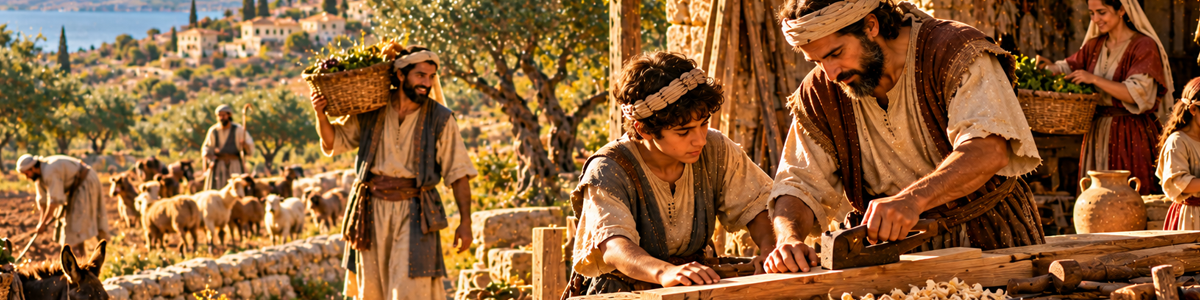
Skilled craftsmen produced many of the objects and structures needed in everyday life. Their work could involve wood, stone, pottery, metal, textiles, construction, or other materials. Learning such work required practice and experience.
Day Labor and Hired Work
Some men earned their living by working for other people rather than from their own land or workshop. Hired labor could provide needed income, but work was not always guaranteed. A laborer's household could therefore be economically vulnerable.
Learning a Trade
Many young people needed practical skills that would allow them to earn a living. A trade could be learned by working alongside someone who already knew the craft. Training often happened through practice rather than through books.
Men in the Community
Men in the Marketplace
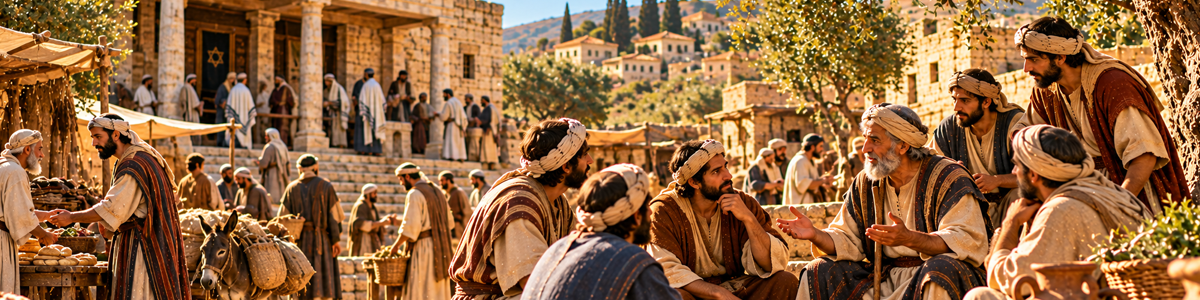
Markets connected households with the wider economy. Men could enter these spaces to buy, sell, seek work, conduct business, or meet other people. The marketplace was therefore both an economic and social setting.
Men and Village Community Life
Men lived within communities where neighbors knew one another and family reputation mattered. Work, worship, trade, disputes, and shared concerns brought men into regular contact with people beyond their own households.
Learning and Religious Life
Education of Boys
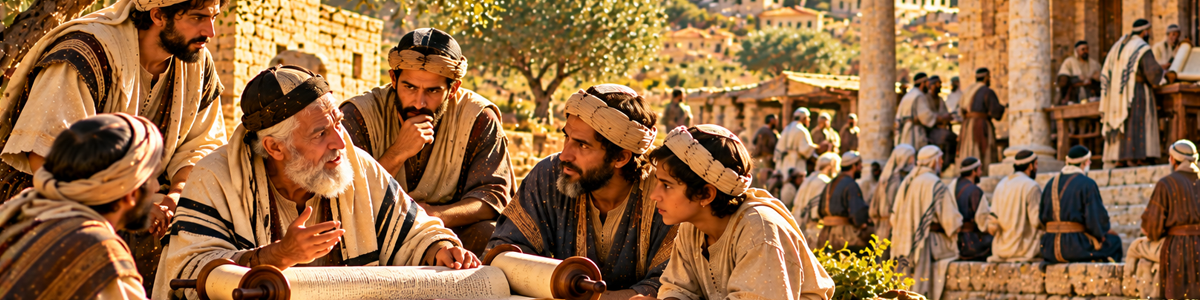
Boys learned the skills and knowledge they would need as adult men. Much of this learning could happen within the family. Some boys also received more formal instruction.
Men's Religious Responsibilities
Jewish men lived within a religious world shaped by Scripture, prayer, Sabbath observance, festivals, family responsibilities, and participation in the life of the Jewish community. Faith was not separated from ordinary daily life.