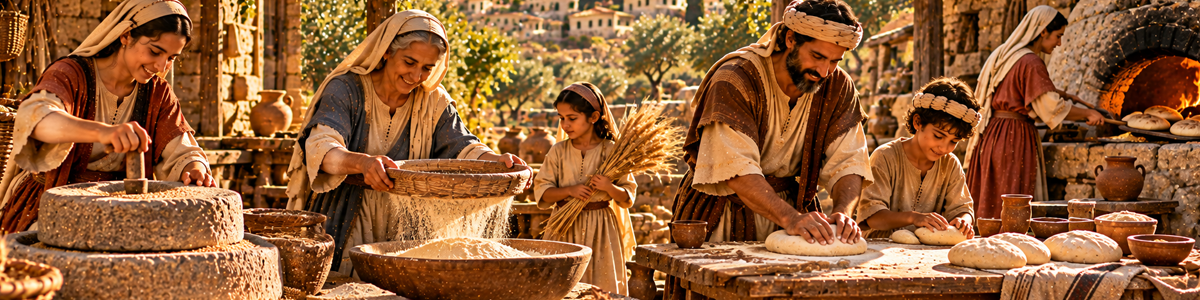
Food was one of the most basic concerns of daily life. Bread, olive oil, fruits, vegetables, legumes, fish, and other foods supplied the household, while the availability of meat and other more costly foods depended greatly on circumstances.
Eating was also more than a matter of satisfying hunger. Meals brought people together, expressed hospitality and fellowship, and could reflect Jewish religious practices and identity.
Overview
The diet of Jewish families in Roman Palestine depended heavily on foods produced by the land. Grain provided bread, olives supplied oil, and grapes could be eaten or made into wine. Fruits, vegetables, legumes, dairy products, and fish added variety to the diet.
What people ate depended on wealth, location, season, and availability. A fishing community near the Sea of Galilee did not have exactly the same resources as a family living elsewhere, and the table of a wealthy household could differ substantially from that of a poor one.
Food also required considerable work before it reached the table. Grain had to be processed, bread prepared, produce cleaned, and foods cooked or preserved. Storage was important because many foods were available seasonally.
Meals had social meaning. Eating together expressed family and community relationships, while offering food to a guest was an important act of hospitality.
Jewish religious life also shaped eating. Biblical dietary laws distinguished permitted from forbidden foods, while fasting, festivals, Sabbath observance, and Passover gave food additional religious significance.
What We Know
Literary sources and archaeological evidence provide substantial information about food in Roman Palestine. Grain, olive oil, fruits, vegetables, legumes, and other agricultural products formed important parts of the diet, while fish, dairy foods, and meat were available in differing amounts and circumstances.
Pottery, cooking vessels, ovens, grinding equipment, storage installations, animal bones, seeds, and other remains help reconstruct how food was prepared and consumed.
The evidence also warns against imagining one universal first-century menu. Diet varied according to economic status, geography, season, and individual household circumstances.
Biblical Context
Food fills the pages of Scripture because it filled everyday life. Bread, grain, wine, olive oil, fish, fruit, meat, herbs, and meals appear repeatedly in biblical narratives and laws.
The Torah also gave food religious significance through dietary laws, offerings, festivals, fasting, and rules governing Passover.
The Gospels continue this pattern. Jesus eats with others, attends meals, feeds crowds, speaks of bread and wine, tells stories involving banquets and feasts, and uses food repeatedly in His teaching.
Why It Matters
Understanding first-century food and meals brings many Gospel scenes closer to the world in which they actually occurred.
The feeding of the crowds involved familiar foods. The complaints about Jesus eating with tax collectors and sinners concerned the social meaning of sharing a table. His references to bread, fasting, feasts, fish, wine, and hospitality drew upon experiences His hearers understood immediately.
The Last Supper is especially important. It took place within the Jewish world of Passover and shared meals, yet Jesus gave the bread and cup a new and profound significance centered upon His approaching death.
The Everyday Diet
Food in the First-Century Jewish Household
Food in a first-century Jewish household depended on agriculture, household resources, local markets, and the seasons. Bread and other grain foods were important, while olive oil, fruits, vegetables, legumes, fish, dairy foods, and occasional meat could add variety.
Olives and Olive Oil
Olives and olive oil were important products of the land. Oil could be used in food preparation and also had uses beyond eating. Olive cultivation therefore connected agriculture, household life, and commerce.
Grapes and Wine
Grapes were an important crop in Roman Palestine. They could be eaten fresh or dried, but much of their importance came from wine production. Wine was a familiar part of meals, agriculture, commerce, and religious life.
Figs, Dates and Other Fruits
Fruit added variety and sweetness to the first-century diet. Figs, dates, grapes, pomegranates, and other fruits could be eaten fresh when available, while some could also be dried or otherwise preserved for later use.
Lentils, Beans and Other Legumes
Lentils, beans, and other legumes provided useful foods that complemented grain and other plant products. They could be prepared in stews and other dishes and were particularly valuable because dried legumes could be stored.
Vegetables, Herbs and Seasonings
Vegetables, herbs, and seasonings added variety and flavor to meals based heavily on grain and other staple foods. Some could be grown in household gardens or fields, while others could be obtained through local exchange.
Fish
Fish formed an important part of the food economy in some parts of Roman Palestine, especially around the Sea of Galilee. Fish could be eaten fresh near the place of catch, while processing and preservation allowed it to travel farther.
Meat and Poultry
Meat formed part of the first-century diet, but access to it varied considerably. Wealth, livestock ownership, location, religious practice, and the occasion all affected when and how much meat a household might eat.
Milk, Cheese and Dairy Foods
Sheep and goats could provide milk as well as meat and wool or hair. Milk could be consumed or processed into products that kept longer, making dairy foods another part of the varied household diet.
Bread and Grain
Bread as the Daily Staple
Bread was one of the fundamental foods of ancient Jewish life. Producing it required grain, grinding, water, preparation of dough, fuel, and baking. Its importance explains why bread became such a natural symbol of ordinary sustenance.
Wheat, Barley and Other Grains
Grain was fundamental to agriculture and diet in Roman Palestine. Wheat and barley were especially important and could be processed into bread and other foods. Grain production linked the agricultural year directly with the household table.
Grinding Grain
Grain had to be ground before it could become bread. Grinding was repetitive physical work and was commonly associated with women's household labor. It was one of the ordinary tasks behind the daily provision of food.
Making and Baking Bread
Bread was a basic part of the daily diet, but making it required work. Grain had to be ground before dough could be prepared. The dough then had to be shaped and baked using the household's available oven or cooking equipment.
Preparing and Preserving Food
Preparing Food for the Household
Preparing food was a repeated part of household life. Ingredients had to be processed before they could become a meal. Women were commonly involved in this work, although the exact division of labor varied among households.
Preparing and Cooking Food
Preparing food required substantial household labor. Grain had to be processed, ingredients cleaned and prepared, fires maintained, and foods baked, boiled, roasted, or otherwise cooked using relatively simple equipment.
Preserving and Storing Food
Food had to last beyond the moment of harvest or preparation. Drying, salting, processing, and careful storage helped households preserve foods and maintain supplies when fresh produce was unavailable.
Meals and Eating Together
The Daily Meal
Most meals were ordinary household events rather than elaborate banquets. Bread and other available foods were eaten according to the resources of the family, while the form and abundance of a meal could vary considerably with wealth and occasion.
Eating Together
Sharing food could express family membership, hospitality, friendship, fellowship, and social acceptance. For that reason, the question of who ate together could carry meaning far beyond the food itself.
Food and Religious Life
Dietary Laws and Food Purity
Jewish eating was shaped by biblical commandments that distinguished permitted from forbidden animals and by additional concerns about food, purity, and Jewish identity. The precise practices followed by Jews were not necessarily identical in every community or period.
Fasting
Fasting was a recognized part of Jewish religious life. By voluntarily going without food for a period of time, people could express mourning, repentance, humility, prayer, or devotion to God.
Feasts and Special Meals
Special meals marked occasions that stood apart from ordinary daily eating. Festivals, weddings, family celebrations, hospitality, and other important events could bring people together around food and express joy, fellowship, honor, and religious identity.