
Xerxes I
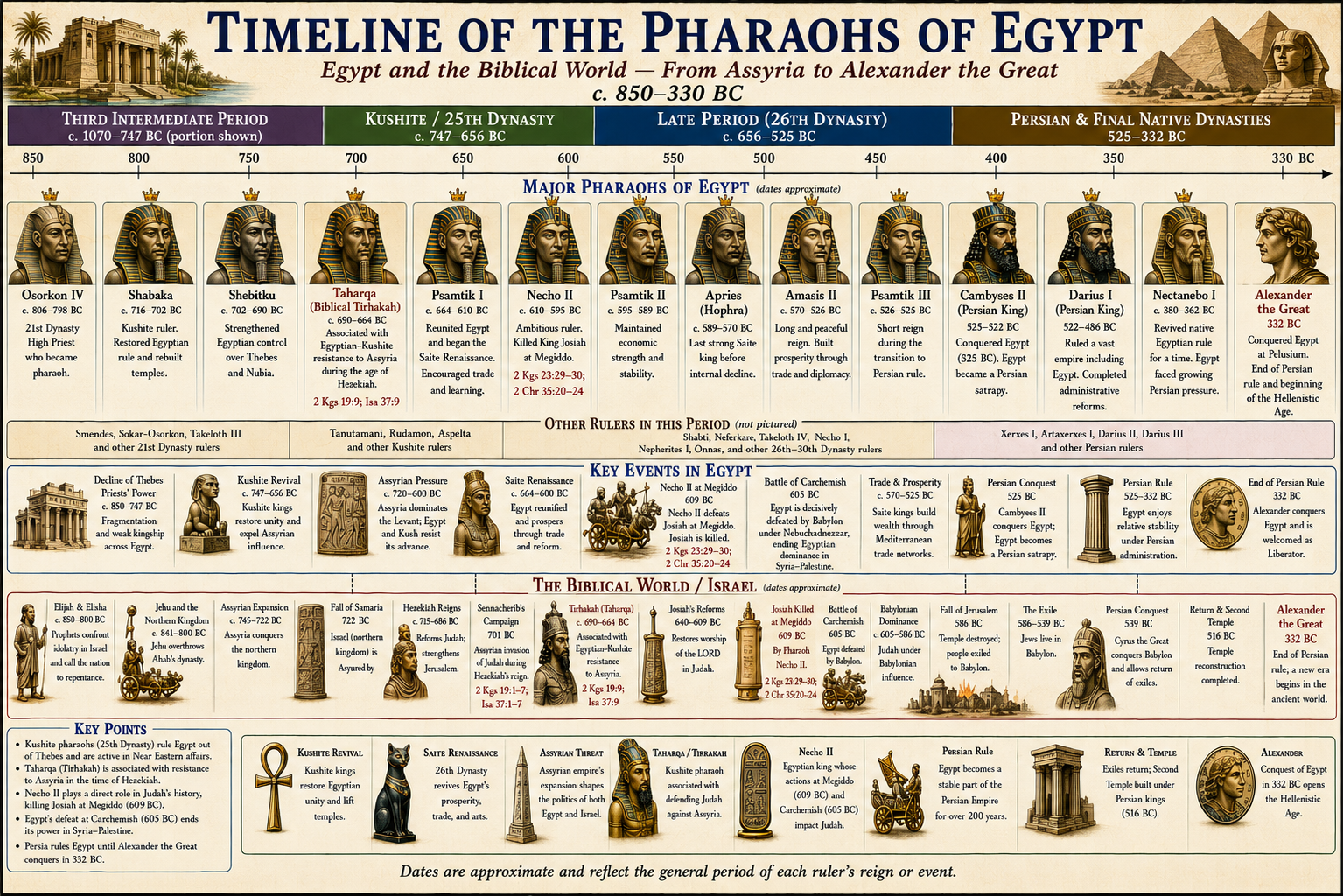
Xerxes I was an Achaemenid Persian king and pharaoh of Egypt, succeeding Darius I and ruling a vast empire from India to the eastern Mediterranean.

Xerxes I was an Achaemenid Persian king and pharaoh of Egypt, succeeding Darius I and ruling a vast empire from India to the eastern Mediterranean.

Artaxerxes I ruled the Persian Empire and Egypt during the fifth century BC.

Darius II ruled Egypt as part of the Persian Empire late in the 27th Dynasty. Increasing instability within the Achaemenid realm encouraged renewed Egyptian resistance, which ultimately resulted in Egypt recovering its independence shortly after his reign.
Amyrtaeus successfully led Egypt away from Persian domination and became the sole ruler of the 28th Dynasty. His accession in 404 BC restored native Egyptian independence, although his dynasty ended with his own relatively brief reign.

Nepherites I founded Egypt's 29th Dynasty after replacing Amyrtaeus and established his capital at Mendes in the eastern Nile Delta. His reign strengthened Egypt's renewed independence while the country continued preparing to resist Persian attempts at reconquest.

Psammuthes was a short-lived ruler of the 29th Dynasty whose position in the succession remains somewhat uncertain. His brief reign occurred amid internal dynastic rivalry during Egypt's struggle to preserve its independence from the Persian Empire.

Hakor was the most important ruler of Egypt's 29th Dynasty and successfully maintained Egyptian independence in the face of Persian pressure. He pursued alliances with other opponents of Persia and undertook significant building activity during his comparatively long…
Nepherites II was the final ruler of Egypt's 29th Dynasty and reigned for only a few months. His overthrow by Nectanebo I brought the Mendesian royal line to an end and established Egypt's final native dynasty.

Nectanebo I founded Egypt's 30th Dynasty and successfully resisted a major Persian attempt to reconquer the country. His reign was also marked by an ambitious temple-building program that contributed to a flourishing of traditional Egyptian religious architecture.

Teos succeeded Nectanebo I and launched an ambitious campaign against Persian territory with the support of Greek mercenaries. Heavy taxation and political opposition undermined his position, and he was displaced by his relative Nectanebo II.

Nectanebo II was the final native pharaoh of ancient Egypt and an energetic patron of temples and traditional Egyptian religion. He resisted Persian invasion for years, but Egypt was eventually reconquered, ending the last period of indigenous pharaonic…

Artaxerxes III reconquered Egypt for the Achaemenid Persian Empire after defeating Nectanebo II. His victory ended Egypt's final native dynasty and began the second period of Persian rule, which lasted until the conquest of Alexander the Great.
© 2026 AVisitWithJesus
"For God so loved the world, that he
gave his only begotten Son,
that whosoever believeth in him should
not perish, but have everlasting life."
